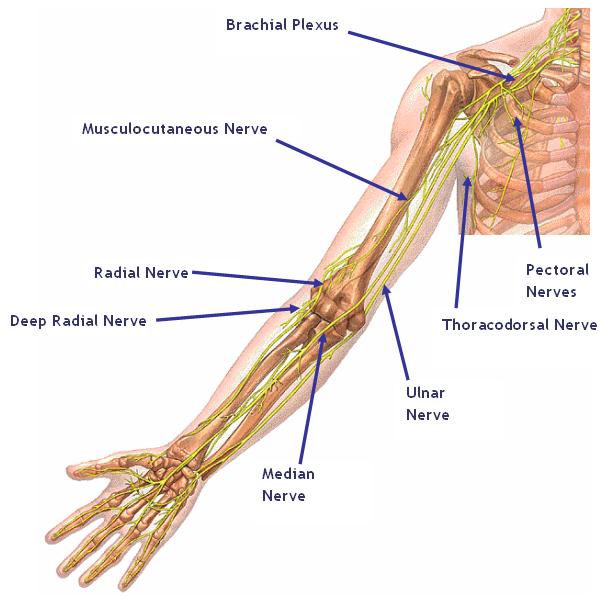
Brachial Plexus Injury
Injury to brachial plexus can occur in many ways.
These include the contact sports, road traffic accident, motor vehicle accident or during birth.
Grossly, it can be divided into:
• Traumatic e.g motor vehicle accident, contact sports
• Non traumatic e.g. obstetric palsy and Parsonage-Turner Syndrome
The network of nerves is fragile and can be damaged by stretching, pressure or cutting.
Stretching can occur when the head and neck are forced away from the shoulder.
If severe enough out of their roots in the neck. Pressure could occur from crushing of the brachial plexus between the collarbone and first rib, or swelling in this area from injured muscles or other structures.
Traction, also known as stretch injury, is one of the mechanisms that cause brachial plexus injury. The nerves of the brachial plexus are damaged due to the forced pull by the widening of the shoulder and neck. Traction occurs from severe movement and causes a pull or tension among the nerves. This tension is forced and can cause lesions of the upper roots and trunk of the nerves of the brachial plexus.
Heavy impact to the shoulder is the second common mechanism to causing injury to the brachial plexus. Depending on the severity of the impact, lesions can occur at all nerves in the brachial plexus.
The location of impact also affects the severity of the injury. Some forms of impact that affect the injury to the brachial plexus are shoulder dislocation, clavicle fractures, hyperextension of the arm.
IF you need help with a brachial plexus injury,
Jason
